Royal Mint 18 rarest coins minted under Queen Elizabeth II

The Allure of Rare Coins
Rare coins have captivated collectors for centuries, and their allure can be attributed to several factors. One reason is the thrill of the hunt, as collectors search for specific coins that are hard to find. This can involve scouring local coin shops, attending coin shows, or even searching online marketplaces. Some rare coins are highly sought after due to their historical significance, while others are prized for their aesthetic appeal. The rarity of a coin can be determined by factors such as the number of coins minted, the condition of the coin, and the demand for the coin.*
The Kew Gardens 50p
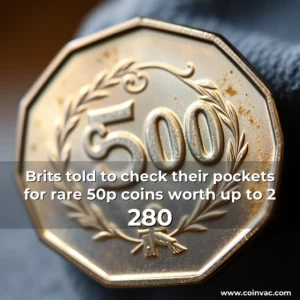
The Kew Gardens 50p is a highly prized coin among collectors. It was released in 2012 to commemorate the 350th anniversary of the Royal Botanic Gardens, Kew.
50 pence pieces, issued from 1971 onwards, have a unique design feature – a crown, which has been a central element of British monarchies for centuries. The crown is a representation of the monarch’s power and authority. The 50 pence piece’s design has undergone several changes over the years, but the crown remains a constant feature. The coin’s value is determined by its rarity and condition, making it a highly sought-after collectible among numismatists. In recent years, the 50 pence piece has become increasingly popular, with many collectors seeking to complete a set of all the various designs released since 1971. Completing a set of 50 pence pieces is considered a challenging and rewarding task. Collectors must have a deep understanding of the various design changes and issues that have occurred over the years, as well as the rarity of specific coins. This requires significant research, attention to detail, and patience. The UK’s Royal Mint has recognized the popularity of the 50 pence piece and has released special edition coins to cater to collectors. These special edition coins often feature unique designs and are produced in limited quantities, making them highly collectible. The Royal Mint has also released commemorative coins to mark significant events and anniversaries, such as the Queen’s Platinum Jubilee.
The 1936 British 20 Shillings coin is one of the rarest and most valuable coins in the world. The coin has a mintage of only 1,000, and is considered a Holy Grail for collectors.
The 1936 British 20 Shillings Coin: A Holy Grail for Collectors
The 1936 British 20 Shillings coin is a rare and highly sought-after coin among collectors. Its unique characteristics and limited mintage make it a true treasure for those who appreciate the art of numismatics.
Characteristics of the Coin
The coin’s large size and limited mintage make it a standout among British coins. The 27.5mm diameter allows for intricate designs and decorative pictures, making it a true work of art.
Historical Significance
The 1936 British 20 Shillings coin was minted during a tumultuous time in British history. King Edward VIII abdicated the throne in 1936, and the coin features a portrait of the former monarch.
Market forces drive coin values, with demand influenced by rarity, condition, historical significance, and popularity.
The Role of Market Forces in Determining Coin Values
The value of a coin is not solely determined by its rarity or historical significance. Market forces play a significant role in determining the value of a coin. This is evident in the way coins are sold, as mentioned earlier. The demand for a particular coin can drive up its value, while a lack of interest can lead to a decrease in value. Factors that influence market demand include: + Rarity: Coins that are scarce or hard to find can command higher prices. + Condition: Coins in excellent condition can be more valuable than those that are worn or damaged. + Historical significance: Coins with significant historical or cultural importance can be highly sought after. + Popularity: Coins that are popular among collectors can drive up demand and value.
The Impact of Condition on Coin Values
The condition of a coin can have a significant impact on its value. Coins that are in excellent condition can command higher prices than those that are worn or damaged. This is because collectors are willing to pay a premium for coins that are in pristine condition.

news is a contributor at CoinVac.com. We are committed to providing well-researched, accurate, and valuable content to our readers.