
The 1975 No S Roosevelt Dime : A Minting Error Coin Worth Up To 450 000 Is Yours One Of The Rarest
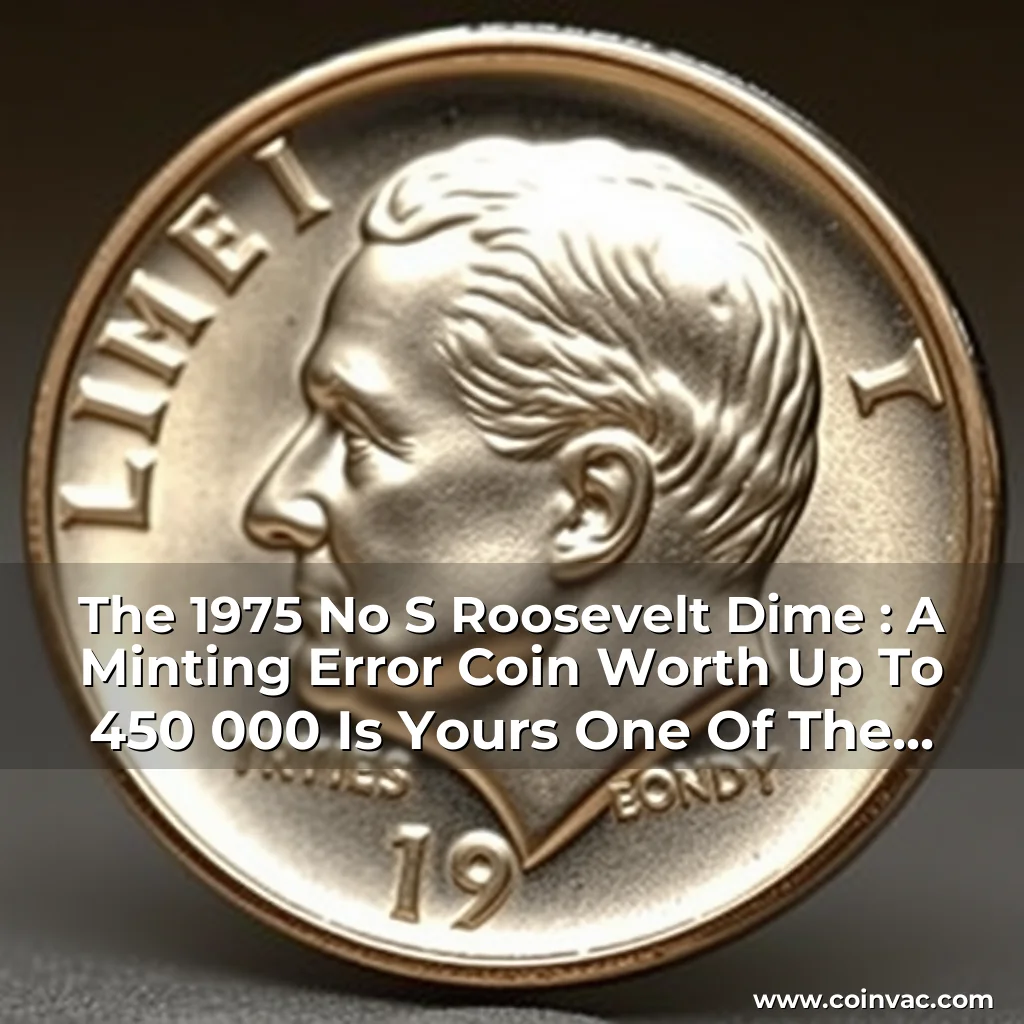
The error is attributed to a 1975 Lincoln Memorial Half Dollar, which features a misaligned obverse (front) of the coin, resulting in an uneven, or no-s configuration. The error is due to a misaligned die, which was used to produce the coins, a phenomenon known as die clash. This occurred when the die was not properly aligned or was damaged during the minting process. The misaligned die resulted in the distinctive no-s error, which has become a hallmark of the 1975 Roosevelt Dime. Die clash is a phenomenon in which two metal dies are used to strike coins, but the dies are not properly aligned. This can occur due to various reasons, including damage to the dies, improper alignment, or human error. When the dies are not aligned correctly, the blanks (the metal discs that the coins are minted from) are not struck consistently, resulting in errors such as misaligned dies, die clash, and die polish. Die clash can also occur when two dies are used to strike a coin, but one of the dies is damaged or worn out, causing uneven striking. In the case of the 1975 No-S Roosevelt Dime, the misaligned die resulted in a distinctive error that is highly prized by collectors. The error is characterized by a no-s configuration, where the date 75 is not aligned properly on the obverse of the coin. The error is extremely rare, with only a handful of examples known to exist.
The Roosevelt Dime is a classic example of a coin error that has become highly sought after by collectors.
The Value of Coin Collecting
Coin collecting can be a valuable hobby, not only for the thrill of the hunt but also for the potential financial gain.
The coin’s design is based on the Great Seal of the United States. The 1975 No-S Roosevelt Dime was a unique coin that was produced without the mintmark S. This was done to commemorate the 50th anniversary of the Great Seal of the United States. The Great Seal features a torch, olive branch, and oak branch, which symbolize the principles of freedom, peace, and strength. The coin’s design is based on the Great Seal of the United States, which was designed by Charles Thomson in 1782. The torch represents the light of freedom, the olive branch represents peace, and the oak branch represents strength. The 1975 No-S Roosevelt Dime was produced in limited quantities, making it a rare and valuable coin. The coin’s rarity is due to the fact that it was produced without the mintmark S, which was a standard feature of the Roosevelt Dime. The mintmark S was used to indicate that the coin was produced at the San Francisco Mint. The coin’s design is also notable for its use of a unique minting process.
The error is due to a misaligned die in the minting process. The 1975 No-S Roosevelt Dime is a rare and highly sought-after coin that has garnered significant attention from collectors and numismatists. The coin’s rarity is largely due to a misaligned die in the minting process, which resulted in the absence of the letter S in the word Liberty on the coin’s obverse side.
The Coin’s History
The 1975 No-S Roosevelt dime was minted as part of the regular production of the dime, but it was not intended to be released to the public. The error occurred during the minting process, when a die was used that was supposed to be used for a different coin.
These auction houses have a long history of selling rare and valuable coins, and their reputation for authenticity and expertise is unparalleled.
Rare Coin Investments: A Lucrative Opportunity
Rare coins like the 1975 No-S Roosevelt Dime are highly sought after by collectors and investors due to their unique characteristics and historical significance.
This scarcity contributes to the coin’s high value. The coin’s unique minting error is what sets it apart from other dimes. The S mint mark on the back of the Roosevelt dime is replaced by a No-S mint mark, making it a distinct and rare variation. This error is believed to have occurred during the 1943 production run, when the mint mark was accidentally replaced by a blank space. The historical significance of the 1975 No-S Roosevelt Dime is also a major factor in its value. As a rare coin, it is highly sought after by collectors and museums, who are eager to add it to their collections. The coin’s rarity and historical significance make it a valuable investment opportunity for those interested in numismatics. The coin’s minting error, rarity, and historical significance combine to make the 1975 No-S Roosevelt Dime a highly valuable coin. Its unique characteristics, limited supply, and demand from collectors and museums contribute to its high value, making it a rare and valuable find for those interested in numismatics.
Further details on this topic will be provided shortly.

news is a contributor at CoinVac.com. We are committed to providing well-researched, accurate, and valuable content to our readers.


