Seven Shining Coins Of Medieval India!
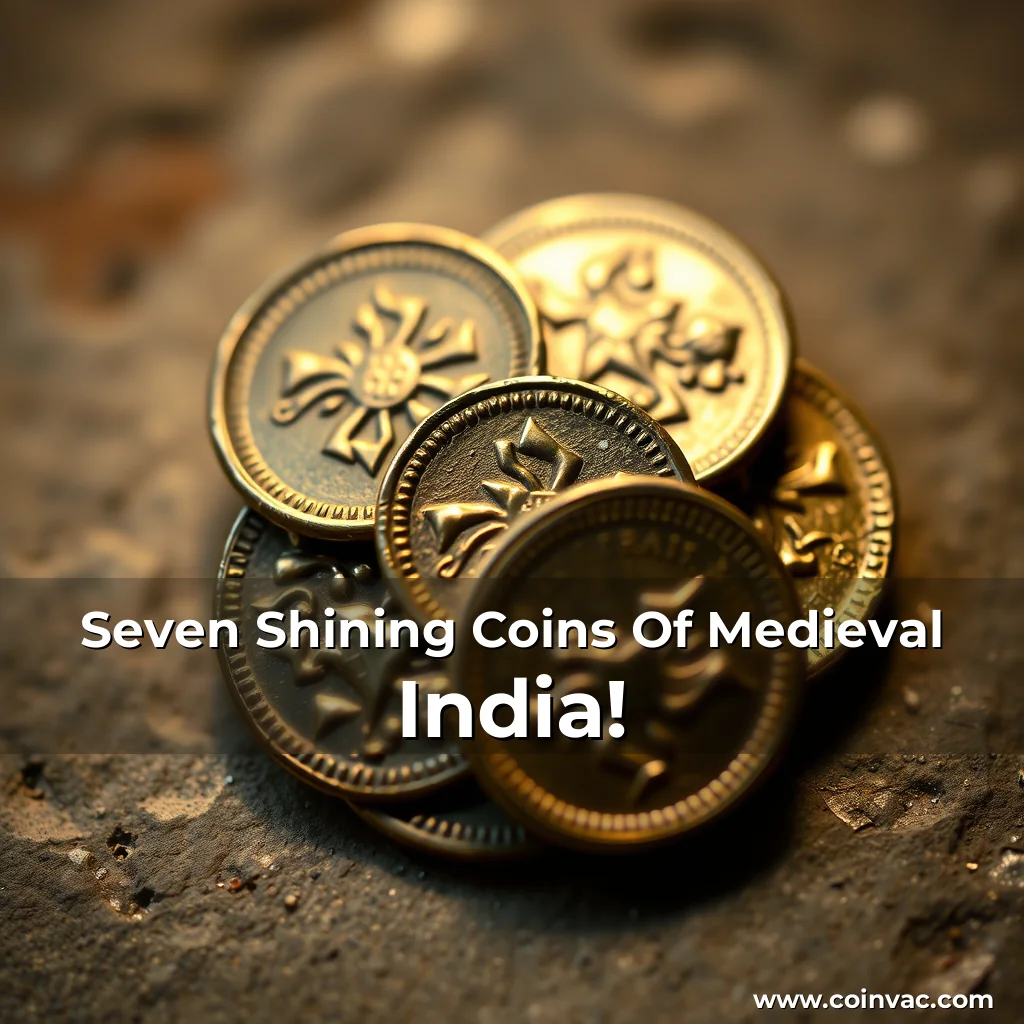
The Coins of Power
Coins were a symbol of wealth and authority, and in medieval India, they were used to signify the power of rulers and emperors. The coins of the Delhi Sultanate, for instance, featured the image of the Sultan, emphasizing his authority and control over the region.
The Jital was widely accepted as a medium of exchange, store of value, and unit of account. It was also used for various transactions, including land revenue and taxation. The Jital was introduced as a substitute for the earlier currency, the Dinar, which was widely used in the region. The Dinar was gradually phased out, and the Jital became the dominant currency. The Jital was valued at 1/16th of a Dinar. The coin had a distinctive design featuring a king or a mythical figure, often depicted as a king, and a legend or text. The Jital was made of silver, weighing around 1.5 grams. The coin had a thickness of 0.5 mm and was minted with a central hole. The Jital was widely used in trade and commerce, and its use extended beyond its monetary value as a currency.
The Shahrukhi was a gold coin that featured a portrait of the Mughal emperor, Akbar the Great. The coins of the Mughal Empire were renowned for their intricate designs and craftsmanship. The Shahrukhi, for instance, was minted in various regions, including the Deccan Plateau, the Punjab region, and the Bengal region. The intricate designs on the Shahrukhi were often inspired by Persian art and architecture, reflecting the cultural influences of the Mughal Empire. The coins of the Mughal Empire were also notable for their use of precious metals. The Shahrukhi, for example, was made from 24-karat gold, while the Pana was made from a combination of silver and copper. The use of precious metals gave the coins a high value and made them highly sought after by collectors. The coins of the Mughal Empire were also used for various purposes beyond their monetary value. They were used as a form of currency, but also as a symbol of wealth and status. The Shahrukhi, for instance, was often used as a gift or a token of respect, given to nobles and dignitaries. The coins of the Mughal Empire were also notable for their durability and longevity. Many of the coins have survived to this day, and are highly prized by collectors and museums. The Shahrukhi, for example, is still widely available today, and can be found in many museums and private collections. The coins of the Mughal Empire were also used to record important events and transactions. They were used to record taxes, tributes, and other forms of payment. The Shahrukhi, for instance, was often used to record the payment of taxes and tributes to the Mughal emperor.
The Dam was also used for ceremonial purposes, such as the coronation of the Mughal emperors. The copper Dam was a symbol of the Mughal Empire’s economic prosperity and power. It was a testament to the empire’s ability to standardize and regulate its currency. The Dam was also a reflection of the empire’s cultural and artistic achievements, as it featured intricate designs and patterns.
Further details on this topic will be provided shortly.

news is a contributor at CoinVac.com. We are committed to providing well-researched, accurate, and valuable content to our readers.